Company building
Founder and CEO, Onlay AI
Building agentic automation for dental revenue cycle management: eligibility, benefits, claim creation, attachments, payer follow-up, payment posting, and reconciliation inside existing practice workflows.
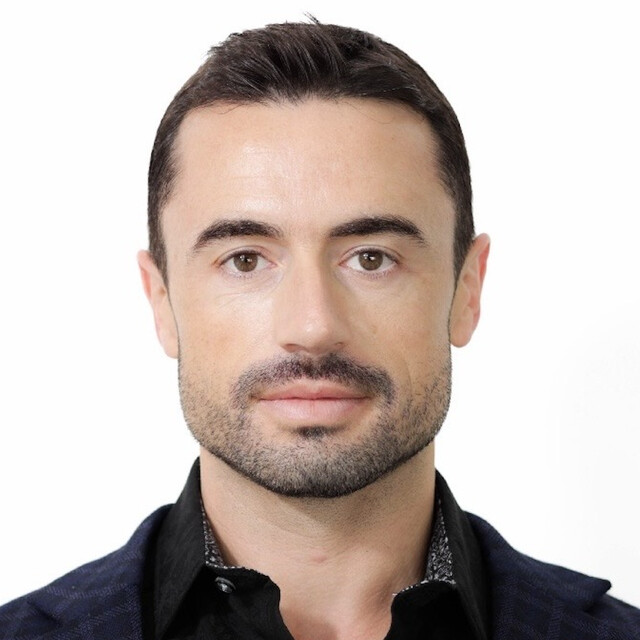
Healthcare AI systems • Medical physics • Dental RCM automation
Healthcare AI founder with roots in radiation oncology physics, building practical tools for dental insurance and revenue cycle teams.
About
Vasant Kearney, PhD, is Founder and CEO of Onlay AI, where he builds healthcare AI systems for dental revenue cycle automation.
He was previously CTO and co-founder of Retrace Labs, a UCSF radiation oncology medical physicist, an inventor, and a first-author machine learning researcher across medical imaging, radiotherapy planning, and dental AI.
Name and heritage
Vasant (Patrick) Kearney is of Greek and Irish descent. In Sanskrit, Vasant (वसन्त) directly means "spring," the season of renewal, growth, and vitality.
Professional summary
Vasant Kearney, PhD, builds AI systems that turn clinical and administrative workflows into reliable automation. He is Founder and CEO of Onlay AI, focused on dental revenue cycle agents that verify eligibility, assemble claims, handle attachments, follow up with payers, and post payments.
Earlier, as CTO and co-founder of Retrace Labs, he helped move dental AI from imaging research into claims and network automation. His first-author research spans generative adversarial networks for dose prediction, MR-to-CT translation, CT segmentation, deformable image registration, and dental image inpainting.
Timeline
Company building
Building agentic automation for dental revenue cycle management: eligibility, benefits, claim creation, attachments, payer follow-up, payment posting, and reconciliation inside existing practice workflows.
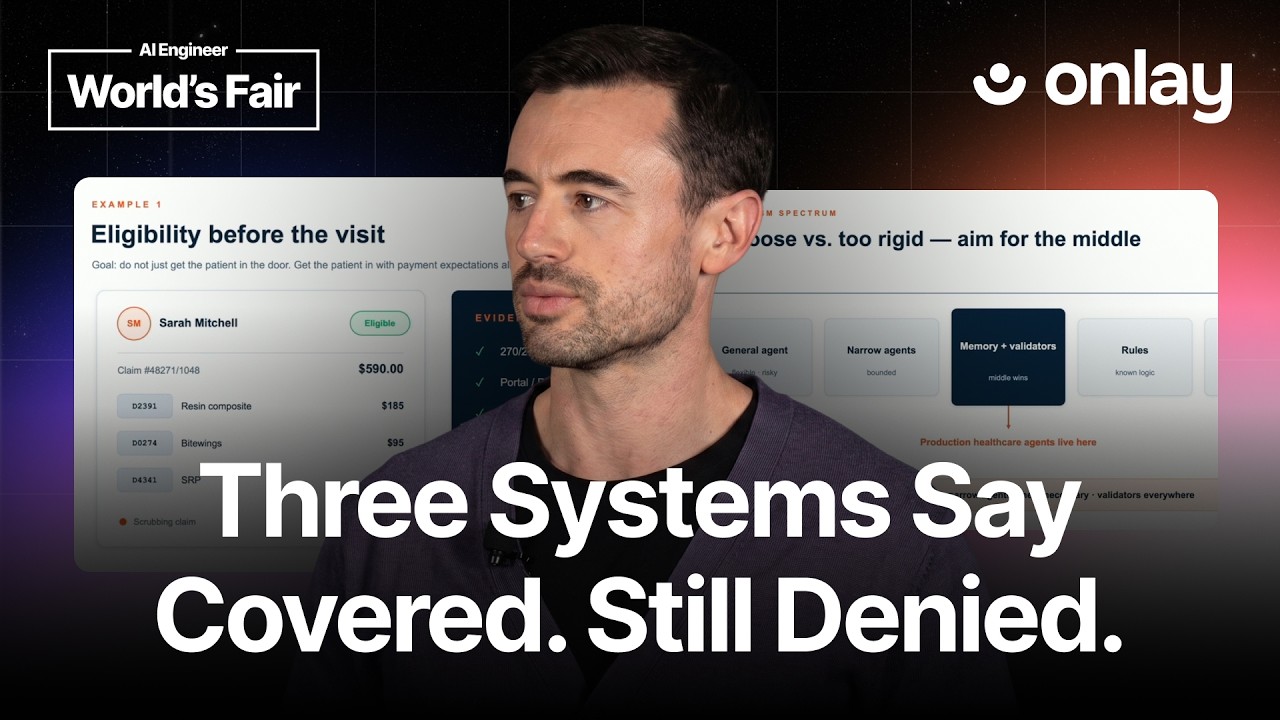
Conference talk
Explained how X12 can serve as a structured execution harness for healthcare AI agents, normalizing payer calls, portals, and EDI transactions while treating every result as provisional until downstream evidence confirms it.
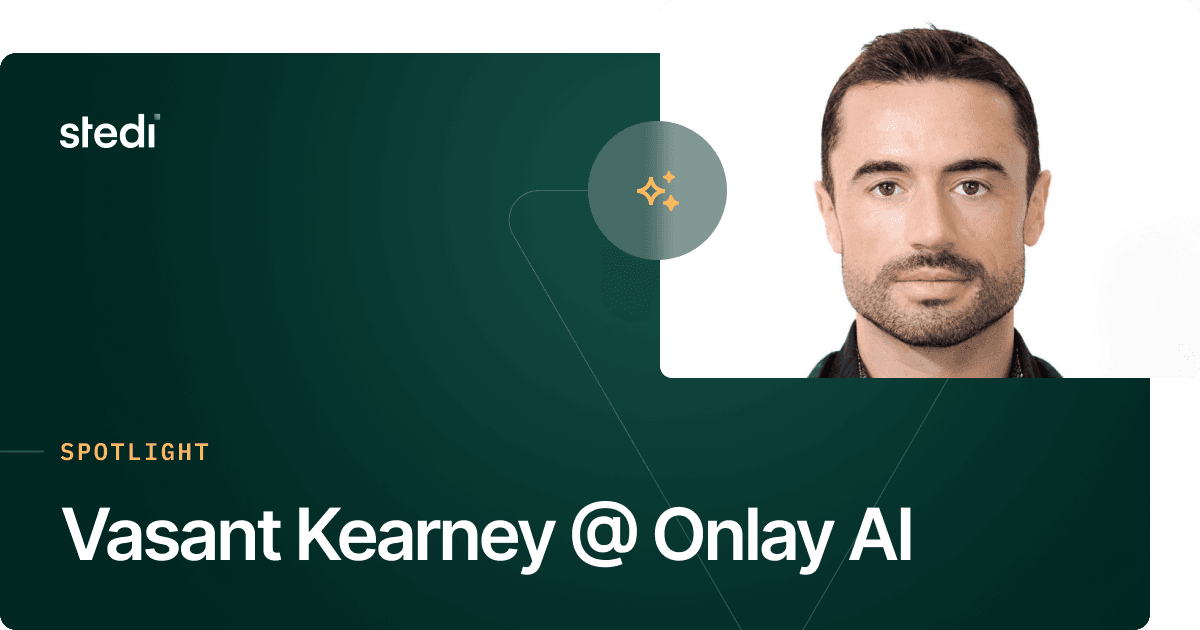
Partner spotlight
Short interview explaining how Onlay agents coordinate eligibility checks, claim assembly, clinical attachments, payment posting, payer portals, clearinghouses, and human escalation.
First-author paper
First-author work showing how generative image completion can restore incomplete dental imagery and improve periodontal clinical attachment level prediction.
Granted patents
Issued IP covering dental image synthesis, image-quality prediction, dental readiness, periodontal measurement, restorative planning, inpainting, and image-to-text generation.
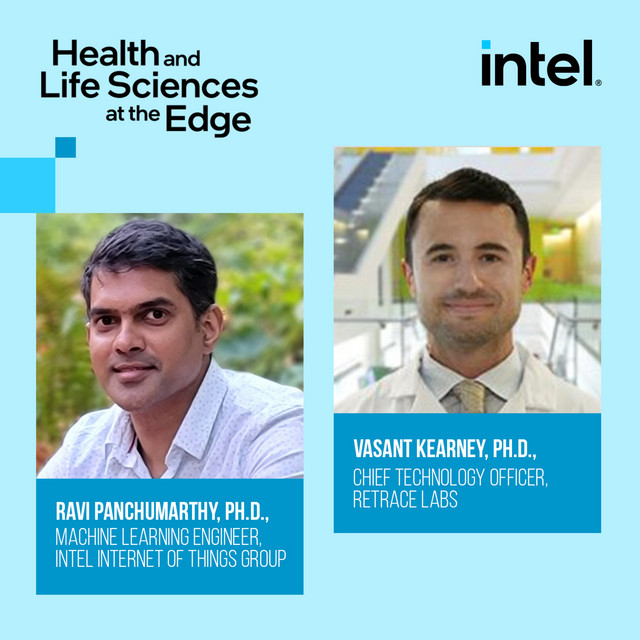
Podcast
Discussed scaling healthcare AI workloads for dental claims with Intel’s Ravi Panchumarthy, including throughput spikes, hardware choices, and production efficiency.
Panel invitation
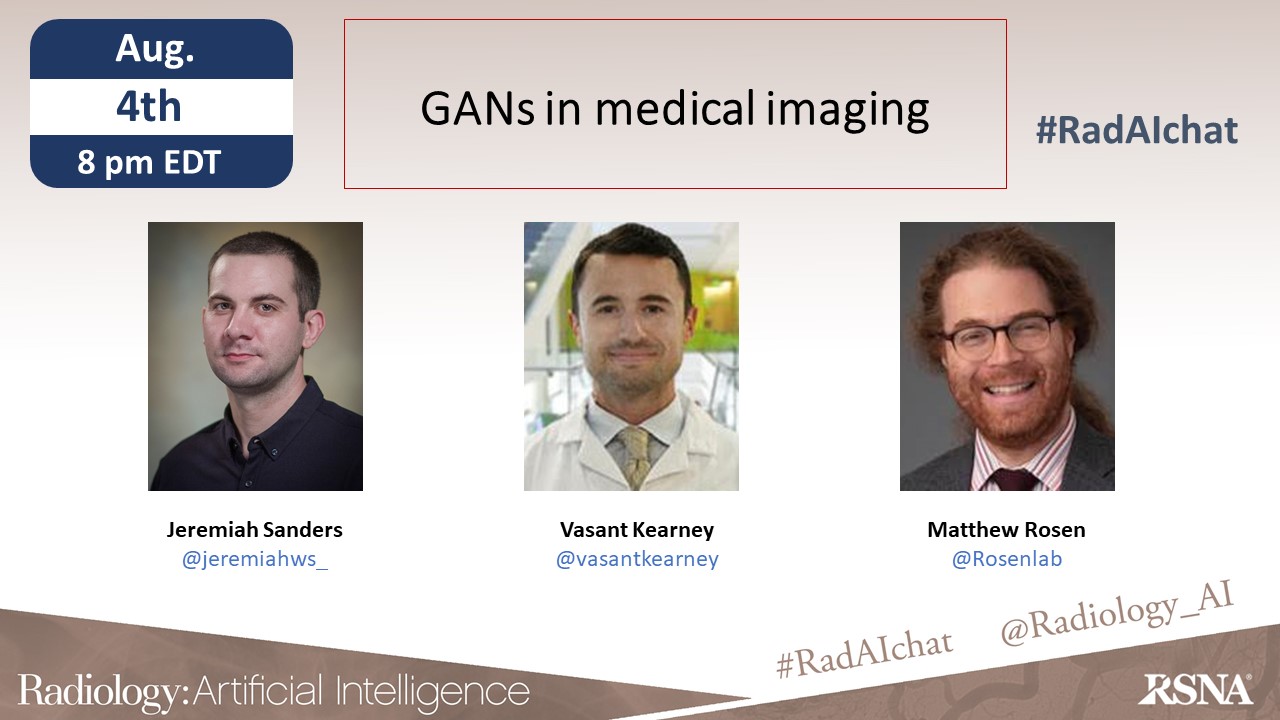
Invited panelist for a Radiology: Artificial Intelligence discussion on generative adversarial networks in medical imaging.
Granted patents
Patented systems connected clinical infrastructure and dental computer vision: cloud radiation therapy treatment planning, plus AI-based pixel-spacing, distance, and volumetric prediction from dental images.
Video
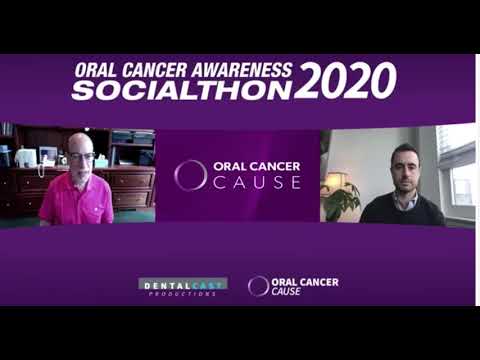
Presented at and sponsored Dr. Ed Zuckerburg's Oral Cancer Awareness Socialthon 2020 and discussed linking dental technology, oral health, and AI-enabled healthcare workflows during an oral cancer awareness event.
Cofounding, IP, and funding
Helped cofound Retrace in 2018; funded the original compute stack and filed the original provisional patent portfolio from early spring through summer 2019 while still an assistant professor, before Retrace's $18M Series A closed in November 2019.
First-author papers
First-author generative AI publications on synthetic dose prediction and MR-to-CT translation for radiation oncology workflows.
UCSF faculty and clinical practice
Served as a UCSF assistant professor from June 2018 through January 2020, treating lung and spinal radiation oncology patients four days per week at Parnassus Radiation Oncology while leading clinical AI and machine-learning research.
Past machine-learning graduate students
Graduate students from this group went on to work at major AI and technology companies including Meta, Cash App, and more.
Talk and first-author papers
Expanded clinical AI work with a 2019 AAPM session and first-author papers/abstracts on spatial-attention MR-to-CT translation and semantic CT segmentation.
Medical physics residency
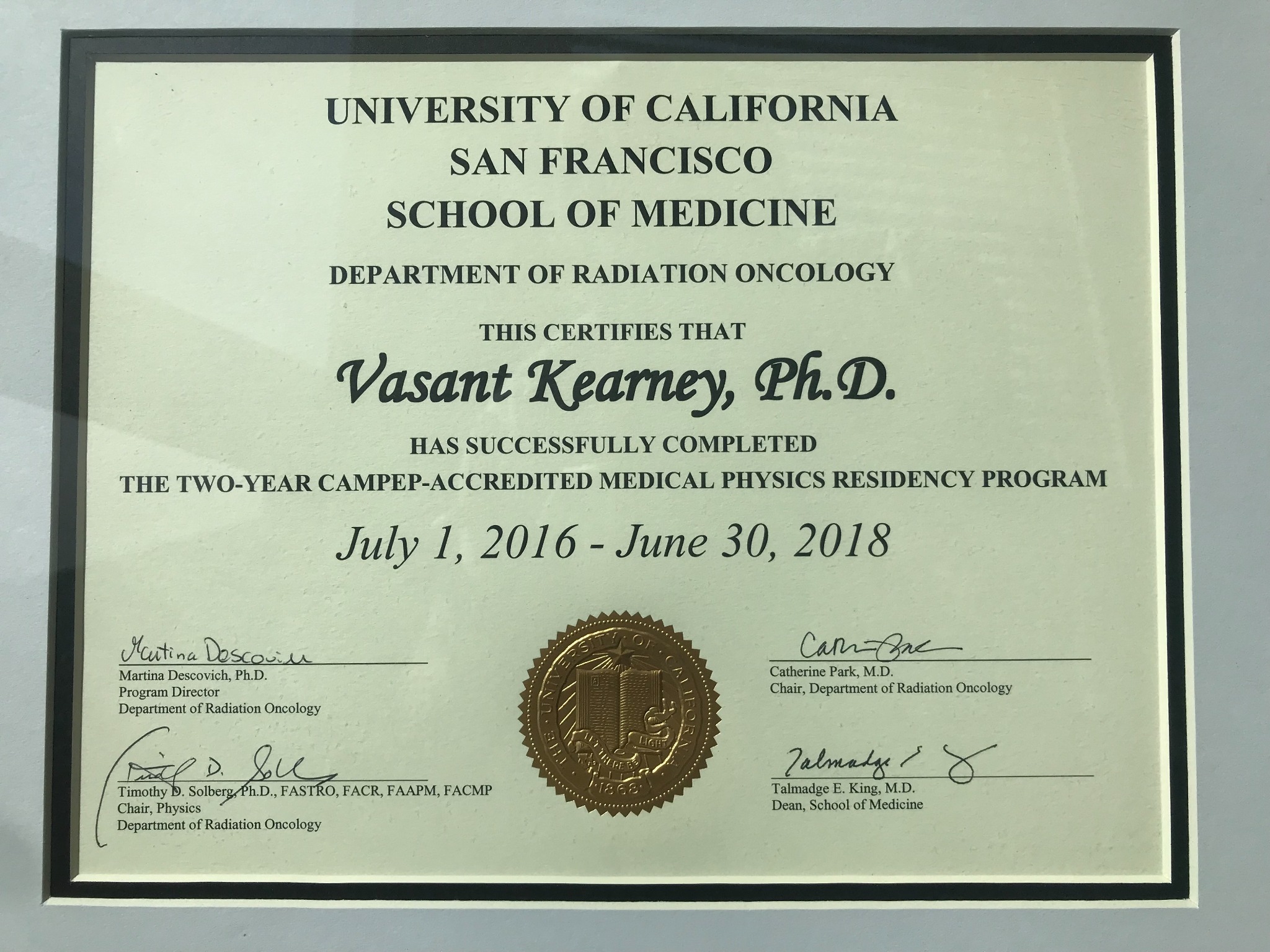
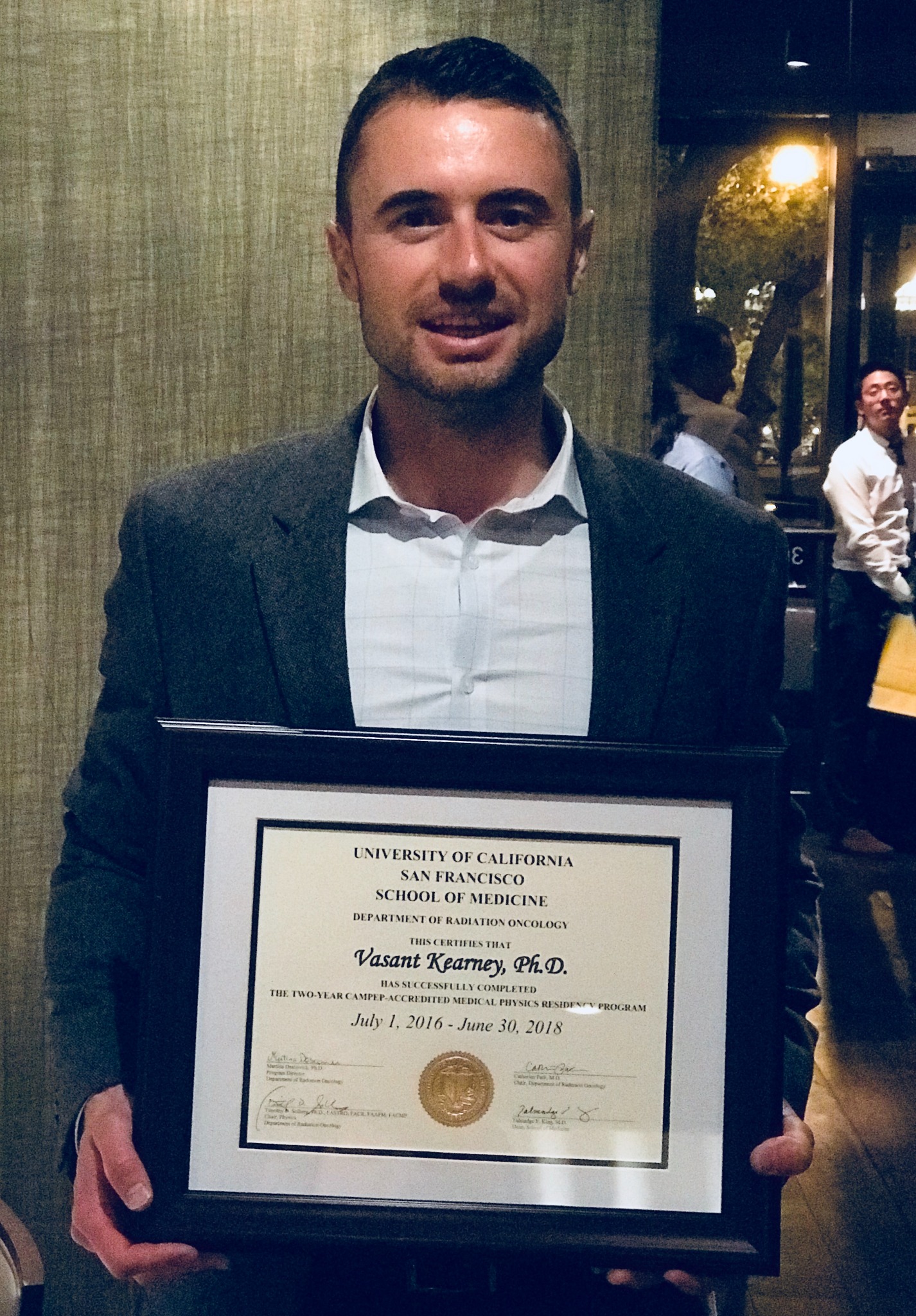
Completed the two-year CAMPEP-accredited radiation oncology physics residency in the UCSF School of Medicine Department of Radiation Oncology.
First-author papers
First-author studies moved from dose prediction to deformable registration, treatment-planning review, and safety-minded AI use in radiation oncology.
CyberKnife and recognition
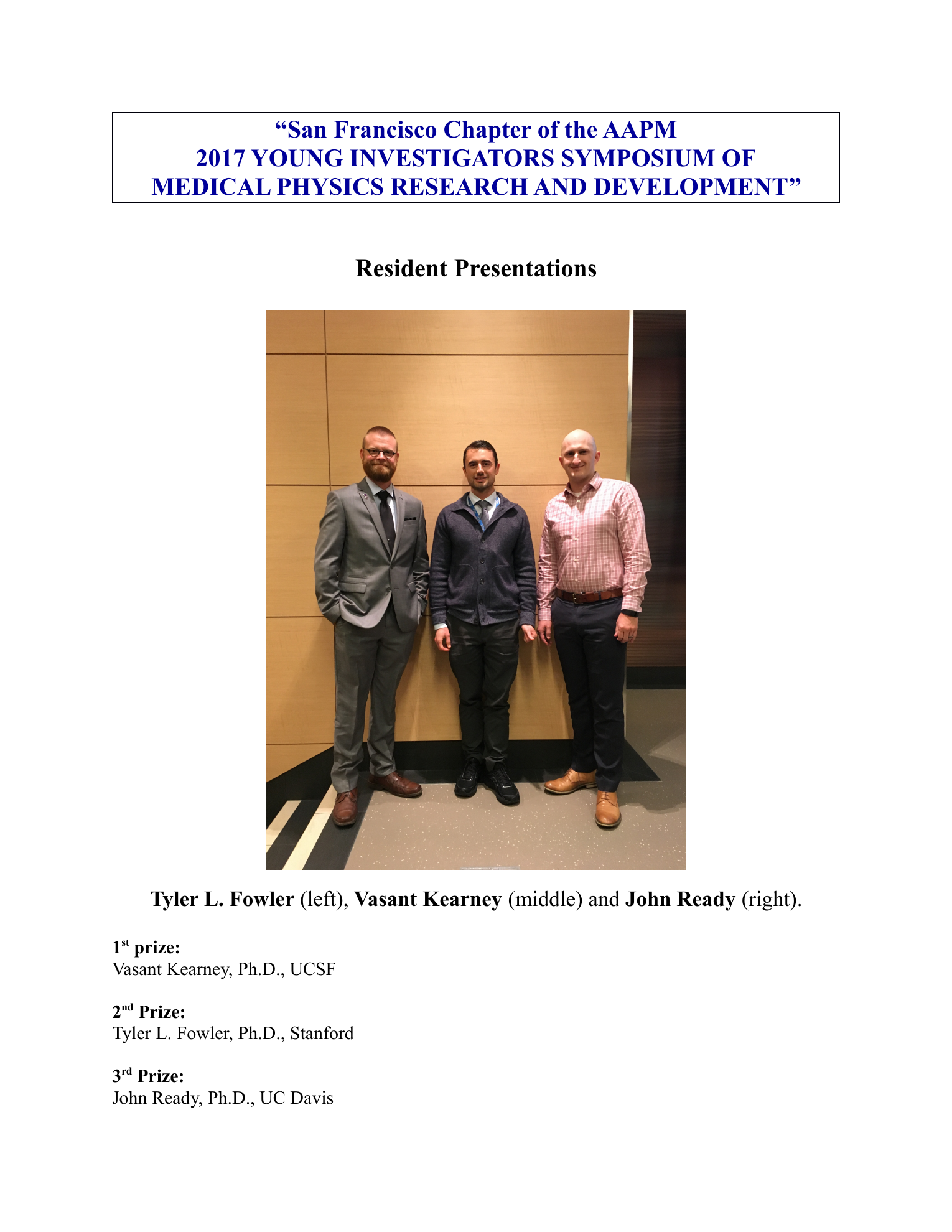
Won first prize in the resident presentations at the San Francisco Chapter AAPM Young Investigators Symposium, alongside first-author work in CyberKnife optimization and deformable image registration.
First-author paper
Early image-registration research automating landmark guidance for deformable registration in radiotherapy imaging.
First-author abstract
Early work aligning planning CT and cone-beam CT for adaptive radiotherapy workflows.
First-author abstracts
Adaptive radiotherapy methods for plan adjustment and CBCT-guided dose evaluation.
First-author abstracts
Early IGART and 4DCT modeling work around motion, tumor regression, and anatomical change.
Away from the keyboard
Travel
Visited countries: United States, Australia, United Kingdom, France, Monaco, Spain, Italy, Greece, Hungary, Austria, Czech Republic, Turkey, Israel, Egypt, Morocco, India, Thailand, Singapore, Laos, Vietnam, Cambodia, China, Japan, Philippines, Mexico, Guatemala, Belize, El Salvador, Honduras, Nicaragua, Costa Rica, Panama, Colombia, Ecuador, Peru, Argentina, Chile, Brazil.
Profiles, publications, and IP